
The right answer to rent vs buy scuba gear is not "buy everything" or "rent forever." Traveling divers need a decision framework. Some equipment is easy to rent, expensive to fly with, and practical to leave to the dive center. Other pieces affect hygiene, fit, safety, or photography enough that owning them makes every trip smoother.
PADI's gear cost guidance makes the tradeoff clear: renting is useful when you are new, dive infrequently, or want to test different equipment, but rental fees add up over time. PADI also notes that many divers start with personal basics because masks are not one-size-fits-all and comfort matters. DAN adds the safety layer: scuba gear is life-support equipment, so every rented or owned item deserves a real pre-dive inspection.

Start with three questions
How often will you dive? If you take one warm-water trip every few years, renting most bulky gear is reasonable. If you dive several trips a year, rental costs, inconsistent fit, and repeated setup time begin to matter.
How fit-sensitive is the item? A leaking mask, loose fin strap, uncomfortable wetsuit, or unfamiliar BCD can turn a good dive into a distraction. The more an item depends on your face shape, body shape, or muscle memory, the stronger the case for owning it.
How critical is familiarity? PADI highlights safety through familiarity as a benefit of owning gear: you know where your alternate air source, SMB, pockets, clips, and accessories sit. That does not mean rental gear is unsafe. It means you should give yourself time to inspect and learn it before entering the water.
Gear that is usually fine to rent
Tanks and weights are almost always rented at the destination. They are heavy, regulated, and impractical for air travel. Confirm the cylinder type, valve compatibility, and whether weight systems are belt-based or integrated.
BCD rental is common, especially for occasional divers. The key is fit and function. Try it on with exposure protection, inflate it, test dump valves, check releases, and make sure pockets or D-rings match your needs. If you use a camera, SMB, or slate, confirm you have a secure place for each item.
Regulators can be rented from reputable dive operations, but they require more trust. PADI calls the regulator essential life-support equipment and recommends choosing a reputable shop if you rent. DAN's equipment checklist recommends inspecting the mouthpiece and hoses, checking for leaks or free-flow, and performing breathing and purge tests.
Exposure suits are destination-dependent. Renting a 3 mm shorty in the tropics may be fine. For cold water, unusual sizing, drysuit diving, or long liveaboard schedules, owning the right exposure protection becomes much more compelling. Be especially conservative when water temperature can shift by site or depth.
Gear worth owning first
Mask, fins, and snorkel are the classic first purchase. A mask that seals on your face is hard to replace with a random rental. Fins affect comfort, trim, and leg fatigue. If you travel light, at least bring your mask and consider renting fins when baggage space is tight.
Dive computer is also worth owning earlier than many divers expect. It follows your actual dive history across operators and days, and you learn its alarms, ascent display, conservatism settings, and battery behavior. If you rent a computer, ask for it before the briefing and make sure you understand the display before splash time.
SMB, whistle, cutting tool where legal, and small accessories are inexpensive compared with the value of familiarity. They also pack easily. If you are still building the habit, review our scuba diving safety guide before your next trip.

Photography gear is different
Camera equipment is where the rent-versus-buy calculation changes. A rented BCD can be adjusted in a few minutes; an unfamiliar camera or housing can cost you the whole dive. Buttons, seals, lens mounts, app settings, white balance, battery life, and storage all need muscle memory. Flying with that kit is its own puzzle, and most of it comes down to building a lighter underwater photography travel kit.
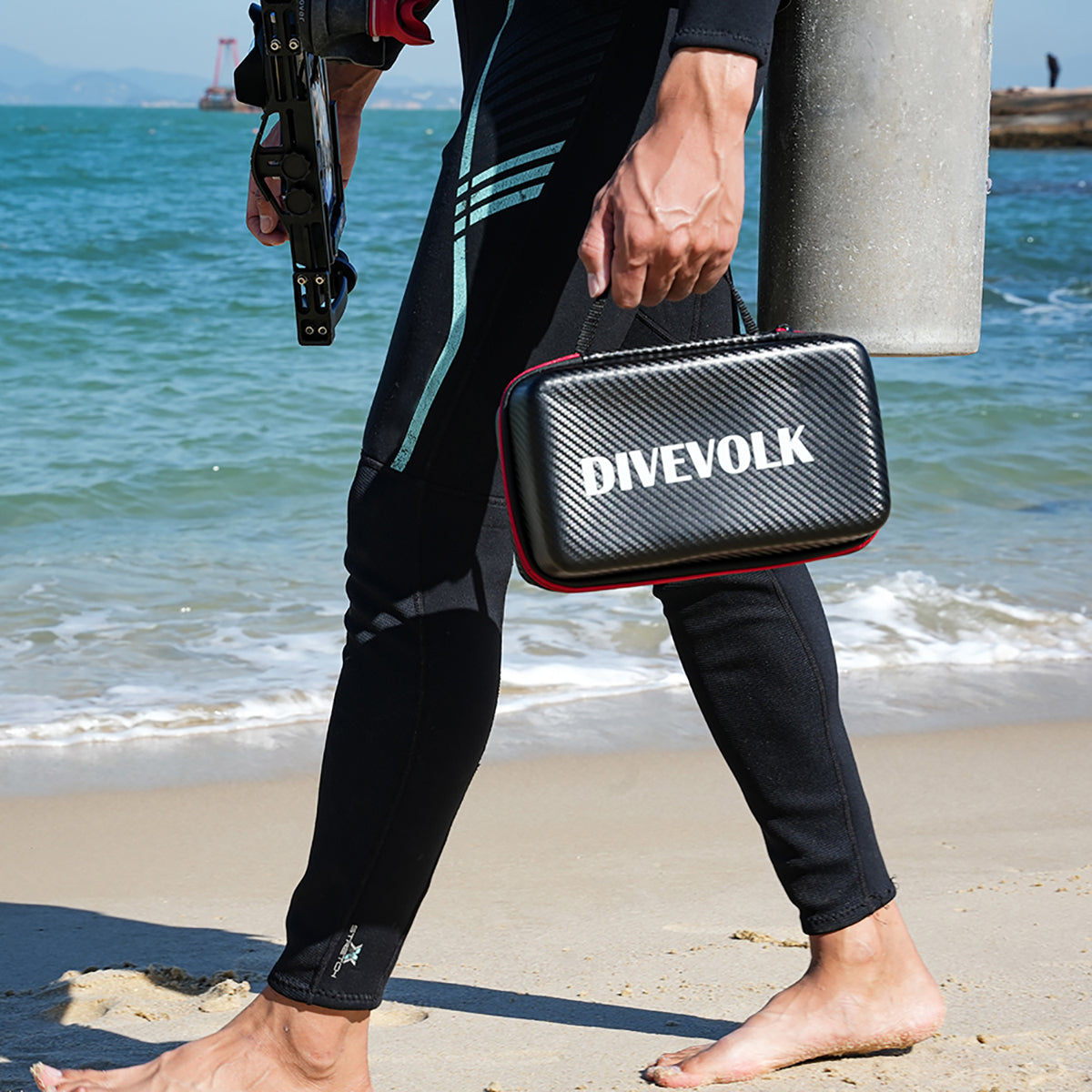
For traveling divers who shoot with a phone, carrying your own underwater phone housing is usually smarter than hoping the destination has a compatible rental. The DIVEVOLK SeaTouch 4 Max PLUS underwater phone housing protects the phone you already know and lets you prepare settings before the trip. If you want a complete starting kit, compare SeaTouch 4 Max Kits, then add wet lenses or filters and compact dive lights only when your shooting goals justify them.
This is not only about image quality. It is about reducing task load. When camera controls are familiar, you spend less time fighting gear and more time maintaining buoyancy, distance, and awareness. Never brace on coral, chase marine life, or block another diver's route for a shot.
Hygiene and fit checks before accepting rental gear
Inspect rental gear with the same seriousness you apply to your own. DAN recommends checking masks for strap pliability, cracks, mold, and purge-valve function if fitted; fins for tears and operational buckles; exposure gear for zippers, seams, tears, and fit; BCDs for inflators, dump valves, stitching, D-rings, buckles, and air retention; and computers for battery, strap condition, and familiar operation.
Also check the human side. Does the dive center give you enough time to test gear? Are sizes available before the boat leaves? Is there a clear replacement plan if something leaks or does not fit? Do not accept a rushed handoff for life-support equipment, and complete a proper pre-dive safety check before descent.
A practical ownership path
If you are building a travel kit, buy in stages. Start with mask, fins, snorkel, SMB, and computer. Add exposure protection if rental fit or warmth is a recurring problem. Buy a BCD when you know what style you prefer. Buy a regulator when service access, travel frequency, and budget make sense. Keep renting tanks and weights. Once you are ready to buy, a breakdown of the core pieces every diver should own covers what to look for in each.
For underwater photography, treat the housing as personal gear. It protects an expensive phone, carries your creative settings, and needs seal discipline. Our comparison of budget and premium phone housings explains what to compare before purchase, and our gear maintenance mistakes guide covers the habits that keep small failures from becoming trip problems.
The best setup is not the most expensive one. It is the setup you can inspect, understand, pack, and use calmly on the boat. Rent the bulky items when it makes sense. Own the fit-sensitive, safety-familiar, and camera-critical pieces that make every dive more controlled.