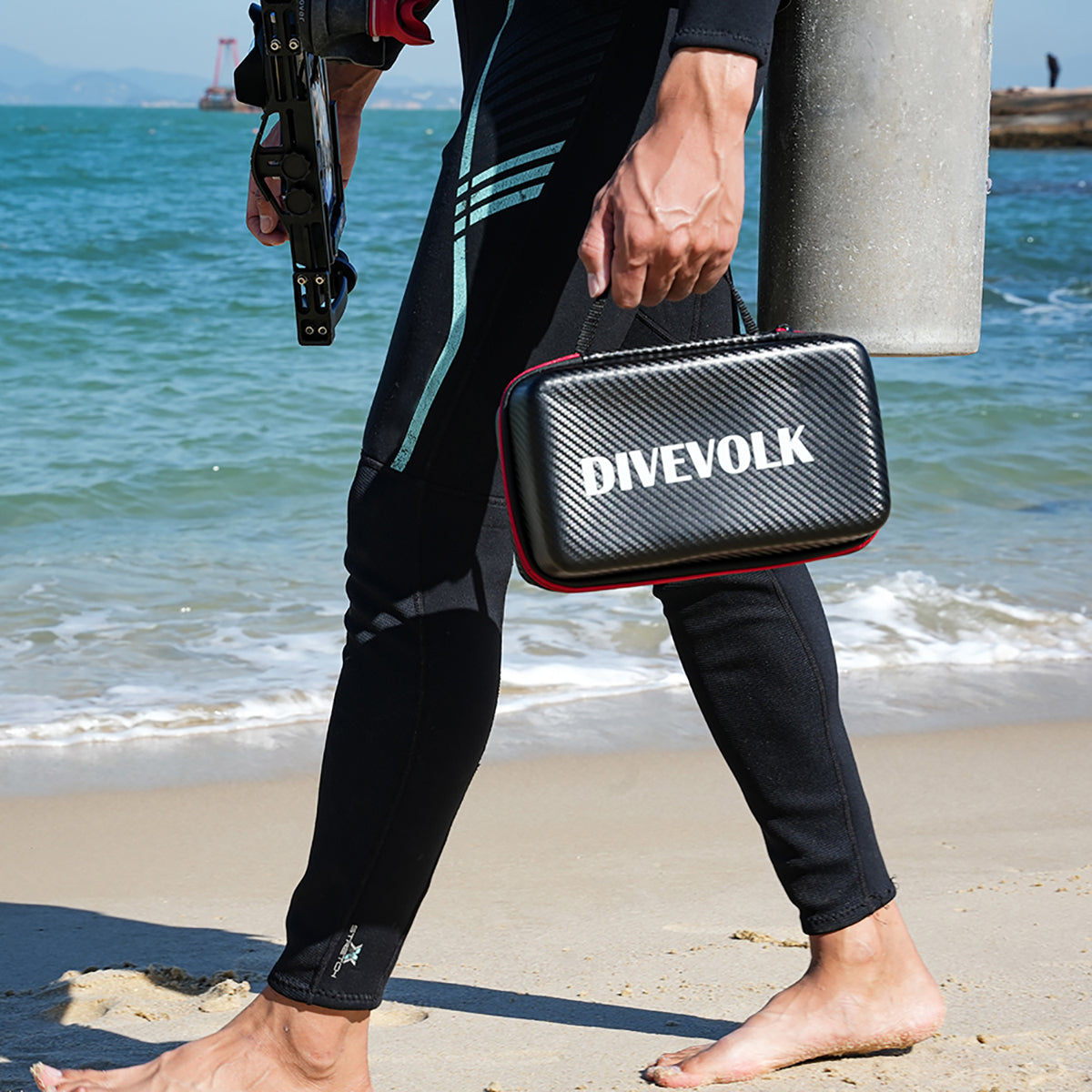

The Xiaomi 17 Ultra is already one of the most capable camera phones ever made, packing a Leica-engineered triple lens system and a 1-inch main sensor into a pocket-sized body. But there is a hard limit to what IP68 water resistance can do: it keeps your phone alive if you drop it in a pool, yet it was never designed for serious underwater photography. The SeaTouch 4 Max Platinum housing changes the equation entirely, turning the Xiaomi 17 Ultra into a depth-rated, fully touchscreen-controlled underwater imaging system that works down to 60 meters (196 feet).
Below, we break down exactly how this pairing works, what creative doors it opens, and why it matters for divers who want professional-grade underwater images without hauling a dedicated camera rig.
From IP68 to 60 Meters: Why a Dedicated Housing Matters
The Xiaomi 17 Ultra ships with an IP68/IP69 rating, which means it can survive brief submersion in shallow fresh water under controlled lab conditions. In practice, that rating does not account for salt water, water pressure at depth, or the repeated exposure that comes with regular diving. A single seal failure at 10 meters and your flagship phone becomes an expensive paperweight.
The SeaTouch 4 Max Platinum solves this with a purpose-built enclosure rated to 60 meters. The housing uses a precision sealing gasket, an anodized aluminum frame, and optical-grade glass over the lens port. But the real breakthrough is DIVEVOLK's patented underwater touchscreen technology. Unlike traditional dive housings that rely on mechanical buttons or fiber-optic shutter triggers, the SeaTouch lets you tap, swipe, and pinch the phone's screen directly through the housing, exactly the way you use it on land.
That distinction matters more than it might sound. With full touchscreen access, you are not locked into a single camera mode. You can switch lenses, adjust exposure, change shooting modes, and even open entirely different apps, all while neutrally buoyant at 30 meters. It is the difference between a waterproof case and a genuine underwater workstation.
Unlocking the Xiaomi 17 Ultra's Leica Triple Camera Underwater
The Xiaomi 17 Ultra's camera hardware reads like a spec sheet from a mirrorless camera: a 1-inch primary sensor co-engineered with Leica, a 200-megapixel periscope telephoto with continuous optical zoom (75-100 mm equivalent), and a 50-megapixel ultra-wide at 14 mm. On land, this system is already among the best in mobile photography. Underwater, paired with the SeaTouch housing, it becomes something genuinely new.
Switch Focal Lengths on the Fly
Because the touchscreen works underwater, you can freely toggle between the Xiaomi 17 Ultra's three Leica lenses during a single dive:
- 14 mm ultra-wide (f/2.2) -- Ideal for wide reef panoramas, large pelagics, swimthroughs, and shipwrecks. The ultra-wide field of view captures context and scale that narrower lenses simply cannot.
- 23 mm main lens (1-inch sensor, f/1.8) -- Your all-rounder for reef scenes, portraits of marine life, and any situation where maximum image quality and low-light performance matter most. The large sensor pulls in significantly more light than standard smartphone sensors, a critical advantage in the blue-shifted, low-contrast underwater environment.
- 75-100 mm periscope telephoto -- Lets you photograph shy or dangerous species from a respectful distance. Capture a hawksbill turtle's eye detail or a lionfish's venomous spines without closing the gap and stressing the animal.
This kind of focal length flexibility is something even dedicated underwater compact cameras rarely offer. With a traditional dive housing, switching lenses means surfacing, opening the housing, and swapping wet lenses. With the SeaTouch and Xiaomi 17 Ultra, it is a single tap.
Touch Focus, Exposure Control, and RAW Capture
Autofocus can struggle underwater. Backscatter, low contrast, and moving subjects conspire against even the best AF systems. The SeaTouch's touchscreen lets you tap to set your focus point precisely where you want it, just as you would on the surface. Combined with real-time EV adjustment (swipe up or down next to the focus point), you can compensate for tricky lighting on the fly.
For shooters who want maximum post-processing latitude, the Xiaomi 17 Ultra supports RAW file capture in its manual (Pro) mode. You can preset white balance, ISO, and shutter speed before a dive, then shoot RAW throughout, preserving the full dynamic range of that 1-inch sensor. The phone's LOFIC HDR technology captures extended highlight and shadow detail in a single exposure, giving you more data to work with when you color-correct back on land, exactly the workflow that serious underwater photographers rely on.
And for video shooters: the Xiaomi 17 Ultra records 8K video. In clear tropical water, this means capturing individual scales on a passing barracuda or the rhythmic pulse of soft coral tentacles in cinematic resolution. Combined with the phone's built-in electronic image stabilization, handheld 8K footage stays usable even in moderate current.

An Open Creative Platform: Third-Party Apps Underwater
This is where the DIVEVOLK approach diverges most sharply from dedicated underwater cameras. Because the SeaTouch housing gives you unrestricted access to every app on your phone, your underwater toolkit is not limited to the native camera.
Consider the possibilities:
- Professional video apps like Filmic Pro give you manual control over bitrate, frame rate, audio levels, and color profiles, capabilities that go well beyond what any dive-specific camera app offers.
- Slow-shutter and long-exposure apps let you experiment with motion blur effects on moving water, swaying kelp, or schooling fish, creative techniques that are normally exclusive to DSLR or mirrorless setups with ND filters.
- DIVEVOLK's own UWACAM app adds dedicated underwater features including automatic color correction (UWACOLOR), built-in LUTs, and AI-powered marine species identification.
No proprietary firmware. No locked-down ecosystem. If there is an app on your phone that does something useful, it works underwater in the SeaTouch housing. That is a level of creative freedom that traditional underwater cameras simply cannot match.
Instant Sharing: Surface and Post
With a conventional underwater camera, your workflow after a dive looks something like this: rinse the camera, open the housing, remove the memory card, transfer files to a laptop, edit, and finally share. It can be hours before a single image reaches social media.
With the Xiaomi 17 Ultra in a DIVEVOLK housing, you surface, towel off the exterior, and your photos are already on the device you use to post. The phone's Bluetooth and WiFi remain fully functional inside the sealed housing, so you can connect to your dive boat's network or tether to a buddy's hotspot without even opening the case. Share a shot of a manta ray encounter to Instagram while the boat is still heading to the next dive site.
For professional dive guides, marine biologists conducting field research, or content creators on tight deadlines, this immediacy is not a luxury. It is a competitive advantage.
Building the Complete Rig
The SeaTouch 4 Max Platinum housing is the foundation, but DIVEVOLK offers a full ecosystem of accessories to expand what your Xiaomi 17 Ultra can do underwater:
- Dive lights -- Restore natural color at depth. Even in clear water, reds and oranges fade below 5 meters. A quality video light brings those colors back and lets you shoot at lower ISO values for cleaner images.
- Wet lenses -- Add a macro lens for super close-up work on nudibranchs and tiny critters, or a wide-angle attachment to push that 14 mm even wider for dramatic over-under splits.
- SeaTouch 4 Max Kits -- Pre-configured bundles that pair the housing with lights, lenses, and handles so you can start shooting on your next dive without piecing together a setup from scratch.
If you are new to underwater phone photography and want guidance on setup, maintenance, or troubleshooting, DIVEVOLK's technical support page has downloadable manuals, compatibility charts, and video tutorials.
Xiaomi Phones + DIVEVOLK: A Gallery of What Is Possible
The Xiaomi 17 Ultra is the newest addition to the Xiaomi Ultra lineup, but DIVEVOLK users have been producing stunning underwater work with earlier Xiaomi flagships for years. The gallery below showcases the kind of results that Xiaomi phones achieve when paired with a SeaTouch housing, from wide-angle reef scenes to extreme macro detail.

A pair of emperor shrimp in striking orange and white, captured with a Xiaomi 14 Ultra. The macro detail reveals individual spots on the carapace -- the kind of close-up work that once required a dedicated macro camera and wet lens.

Coral polyps extending their feeding tentacles, shot with a Xiaomi 15 Ultra at 70 mm f/1.8. The telephoto compression and shallow depth of field isolate each polyp against a soft background -- a look that is difficult to achieve with wide-angle-only underwater setups.

A nearly transparent cleaner shrimp perched on bubble coral, photographed with a Xiaomi 14 at 9 mm f/2. The image demonstrates how effective smartphone macro can be underwater -- individual legs, antennae, and even the shrimp's eggs are rendered in sharp detail.
Is the Xiaomi 17 Ultra the Best Phone for Underwater Photography?
No single device is the "best" for every diver. But the Xiaomi 17 Ultra brings a combination of features that make it exceptionally well-suited to underwater work inside a DIVEVOLK housing:
- 1-inch sensor -- More light-gathering area means cleaner images in the low-light underwater environment, with less noise at higher ISO values.
- Triple Leica lenses (14 mm / 23 mm / 75-100 mm) -- True optical versatility without carrying multiple wet lenses.
- LOFIC HDR + RAW support -- Extended dynamic range and full post-processing control, essential when correcting the blue-green color cast that plagues underwater images.
- 8K video -- Future-proof resolution for serious underwater videographers.
- Snapdragon 8 Elite processor -- Handles computational photography, 8K encoding, and AI scene recognition without lag, even when shooting bursts of a fast-moving subject.
Pair those specs with the SeaTouch 4 Max Platinum's full touchscreen control, 60-meter depth rating, and open app access, and you have a system that genuinely competes with entry-level dedicated underwater camera setups at a fraction of the bulk and cost.
Getting Started
Before purchasing, check the DIVEVOLK compatibility page to confirm that the correct internal adapter module is available for the Xiaomi 17 Ultra. The SeaTouch 4 Max Platinum uses a modular insert system, so the same housing body works across many phone models with a simple adapter swap.
If you are upgrading from an earlier SeaTouch model or switching from a different underwater phone housing, the SeaTouch 4 Max PLUS is also worth considering depending on your budget and feature requirements. Both models share the same patented touchscreen technology and accessory ecosystem.
Ready to take your Xiaomi 17 Ultra beneath the surface? Explore the full SeaTouch 4 Max kit lineup, browse dive lights and lenses to build your ideal rig, or visit PADI's eLearning portal if you are still working on your dive certification. The ocean is waiting.