
Most divers have heard of Komodo. Fewer realize how easy it is to get there — or that May is one of the best months to go. While holiday crowds pack into Bali and Phuket, Komodo National Park offers uncrowded dive sites, reliable manta ray encounters, water temperatures in the mid-twenties, and visibility stretching past 25 meters. Add Komodo dragon trekking and Pink Beach to the itinerary, and you have a trip that non-diving travel partners will actually enjoy too.
This guide covers everything you need to plan a Komodo Island scuba diving trip during the May holiday window (or any spring break): the best dive sites ranked by experience level, how to get to Labuan Bajo, liveaboard vs. land-based options, realistic budgets, and what to pack. Whether you're chasing mantas at cleaning stations or drifting past walls of soft coral, Komodo delivers.
Why Komodo in May?
Komodo's peak diving season runs from April through June, and May sits right in the sweet spot. Here's what makes it ideal:
- Water temperature: 25-28°C (77-82°F) across most sites — comfortable in a 3mm wetsuit
- Visibility: 20-30 meters at the northern sites, with some days pushing past 35 meters at Crystal Rock and Castle Rock
- Manta season: Oceanic and reef mantas are active at Manta Point and Cauldron from March through August, peaking in May and June
- Manageable currents: Still strong at signature sites like Batu Bolong, but more predictable than during the transitional months
- Fewer crowds: Komodo sees a fraction of the diver traffic that Bali, Thailand, or the Maldives get during the same period
The combination of warm water, clean visibility, and manta activity makes May arguably the single best month for Komodo diving. You get the northern sites at their clearest and the southern manta channels still running strong before the colder upwellings of July and August.

Top Dive Sites in Komodo National Park
Komodo's dive sites split into two broad zones: the northern sites (warmer water, better visibility, more hard coral) and the southern sites (cooler nutrient-rich upwellings, manta rays, dense soft coral). A good trip covers both. Here are the six sites that define Labuan Bajo diving.
Batu Bolong — The Pinnacle That Has Everything
A single rock pinnacle rising from 70 meters to just below the surface, Batu Bolong is widely considered one of Indonesia's top five dive sites. The entire structure is encrusted in soft corals — electric purples, neon oranges, deep reds — and the fish density is staggering. Fusilier schools so thick they block the light. White-tip reef sharks patrolling the base. Napoleon wrasse cruising the wall. Giant trevally picking off stragglers at the edge of every baitball.
The catch: currents. Batu Bolong sits in a channel, and the water moves. On a moderate day, you'll drift comfortably along the wall. On a strong day, you'll need a reef hook and the experience to use it. This site is best suited for Advanced Open Water certified divers or experienced intermediates comfortable with current. Dive operators time their visits carefully around the tides — trust their judgment on entry points.
For photography, this is a wide-angle site. The sheer volume of fish against the coral-covered pinnacle creates layered compositions that reward a wide-angle lens setup. Bring a dive light to restore the reds and oranges in the soft corals — the colors are extraordinary when you light them up.
Manta Point — Almost Guaranteed Encounters
Located in the southern channel, Manta Point (also called Makassar Reef) is a long, shallow ridge where oceanic manta rays come to feed on plankton funneled through the strait. During peak season — which includes May — encounters are nearly guaranteed. Not "we saw one in the distance" encounters. Mantas at arm's length, gliding in slow circles over the cleaning stations, sometimes stacking three or four deep.
The mantas here are big. Oceanic mantas (Mobula birostris) can reach 5-meter wingspans, and the individuals at this site are habituated to divers. They will approach you if you stay still, kneel on the sandy bottom, and wait. Do not chase, touch, or block their path. These animals return to these cleaning stations because they feel safe. Irresponsible diver behavior drives them away — and it has happened at sites around the world.

The site is 8-15 meters deep with mild to moderate current — accessible to Open Water certified divers on calm days, though most operators recommend Advanced Open Water. This is one of the best manta ray diving Komodo experiences available anywhere in Indonesia, and it's the single site that puts Komodo on most divers' bucket lists.
Capturing manta encounters on camera is where a phone in an underwater phone housing truly shines. The wide-angle phone camera captures the full wingspan in close quarters, and video mode lets you record the slow, graceful passes that make these encounters unforgettable. The SeaTouch 4 Max gives you full touchscreen control at depth, so you can switch between photo and video without fumbling with buttons while a five-meter manta glides overhead.
Castle Rock — Pelagic Central
Castle Rock is a submerged pinnacle in northern Komodo that never breaks the surface, making it a magnet for pelagic species. Grey reef sharks cruise the perimeter. Schools of giant trevally swirl in tight formations, breaking apart to hunt and reforming seconds later. White-tip reef sharks rest on ledges. On good days, you'll see Napoleon wrasse, eagle rays, and the occasional hammerhead in the blue.
The site is current-dependent — flat days are rare, and that's the point. The current brings nutrients, the nutrients bring baitfish, and the baitfish bring everything else. A reef hook is strongly recommended. Divers typically descend to the pinnacle top at 12-18 meters and hold position, watching the show come to them. This is an advanced site. If you're not comfortable hooking in at 15 meters with 2-3 knots of current pushing past you, save it for another trip.
Crystal Rock — The Coral Garden
Crystal Rock sits near Castle Rock and offers a different character. The hard coral coverage here is exceptional — pristine table corals, staghorn forests, and massive Porites bommies that have been growing for centuries. Schools of anthias pulse over the reef in orange and pink clouds. Sweetlips hang motionless under overhangs. Hawksbill turtles graze on sponges along the walls.
Currents at Crystal Rock are usually moderate — less intense than Castle Rock or Batu Bolong, making it accessible to intermediate divers with good buoyancy control. The site tops out at about 5 meters, so you can extend your bottom time comfortably. For photographers, the hard coral gardens at Crystal Rock are some of the healthiest in Komodo and produce stunning wide-angle reef scenes, especially in the morning light.
Siaba Besar — The Turtle Playground
If you're newly certified or diving with less experienced buddies, Siaba Besar is the site to request. Shallow (5-18 meters), calm, and protected from the strong currents that define Komodo's more famous sites, Siaba Besar is a seagrass and coral garden where green sea turtles are resident. Not occasional visitors — residents. You'll see them resting on the bottom, munching seagrass, and swimming lazily between coral heads.
The relaxed pace here makes it ideal for practicing underwater photography fundamentals. Turtles are patient subjects (as long as you maintain a respectful distance and never chase them), and the shallow depth means plenty of ambient light. A great first site for anyone testing out new gear, including SeaTouch 4 Max Kits — the calm conditions let you focus on composition rather than fighting current.

Tatawa Besar — The Drift Dive
Tatawa Besar is Komodo's signature drift dive. The current carries you along a sloping reef wall painted in soft corals — yellow, purple, red — while schools of fusiliers stream past in the blue. It's effortless once you're in the flow: control your depth, stay off the reef, and enjoy the ride.
The soft coral density here rivals Batu Bolong, but the dive is less demanding because you move with the current rather than fighting it. This makes Tatawa Besar a strong choice for intermediate divers who want big Komodo color without big Komodo currents. Octopus, cuttlefish, and moray eels hide in the crevices along the wall — reward slow divers who look closely.
Trip Planning: Getting to Komodo
How to Get There
All roads to Komodo go through Labuan Bajo (airport code: LBJ) on the western tip of Flores island. There are no direct international flights — you'll connect through:
- Bali (DPS): The most common route. Multiple daily flights, about 1 hour. Airlines include Garuda Indonesia, Lion Air, and Nam Air. Round-trip fares typically $80-150 USD.
- Jakarta (CGK): Direct flights available on select carriers, about 2.5 hours. Useful if you're transiting through Java.
From Labuan Bajo, dive sites are 1-3 hours by boat depending on which zone you're headed to. The northern sites (Castle Rock, Crystal Rock) are the farthest — about 2.5-3 hours by speedboat, which is why liveaboards are popular for covering the full park.
Liveaboard vs. Land-Based Diving
This is the biggest planning decision for any Komodo trip. Both options work, but they deliver different experiences.
Liveaboard:
- 3-4 dives per day, including remote sites that day boats can't reach
- Access to both northern and southern zones in a single trip
- Night dives at sites like Wainilu for muck diving enthusiasts
- Typical cost: $150-400 USD per day, all-inclusive (accommodation, meals, diving, tanks, weights)
- Duration: most trips run 3-5 nights
- Best for: maximizing dive count, reaching Castle Rock and Crystal Rock, seeing the full range of what Komodo offers
Land-based (Labuan Bajo):
- 2-3 dives per day via day trips, limited to sites within 1-1.5 hours of port
- Flexibility to mix diving days with land excursions (Komodo dragon trekking, Pink Beach, Padar Island)
- Typical cost: $50-100 USD per day for a two-dive day trip, plus separate accommodation ($30-150/night depending on comfort level)
- Best for: budget trips, mixed-activity holidays, divers who don't want to sleep on a boat
For a May holiday of 4-5 days, a common approach is to book a 3-night liveaboard covering the major sites, then add a day or two in Labuan Bajo for land activities. If you have a full week, a 5-night liveaboard lets you hit every top site without rushing.

Recommended Trip Duration
- 4-5 days (minimum): Enough for a 3-night liveaboard or 3 days of land-based diving, plus one land excursion day
- 7 days (ideal): Full 5-night liveaboard covering both zones, plus 2 days for Komodo dragon trekking, Pink Beach, and exploring Labuan Bajo
- 10+ days: Add muck diving at Wainilu, repeat visits to Manta Point on different tide cycles, or extend to Flores for spider-web rice paddies and traditional villages
Certification Requirements
Komodo's reputation for strong currents is earned, but not every site requires advanced skills. Here's an honest breakdown:
- Open Water (OW): Sufficient for Siaba Besar, Kanawa Island, and Manta Point on calm days (your dive operator will make the call)
- Advanced Open Water (AOW): Recommended for most sites including Tatawa Besar, Crystal Rock, and Manta Point on typical current days
- Experienced / Advanced: Required for Batu Bolong, Castle Rock, and Shotgun — if your logbook doesn't show current diving experience, responsible operators will suggest alternatives
If you're at the OW level and planning a May trip specifically for Komodo, consider completing your Advanced Open Water certification through PADI before the trip. The deep dive and navigation skills translate directly to Komodo conditions. At minimum, ensure your dive insurance through DAN is current — Komodo's remoteness means evacuation costs can be significant if something goes wrong.
Budget and Practical Tips
Park Fees and Entry Costs
- Komodo National Park entrance fee: Approximately $20 USD per day for foreign visitors (fees have increased in recent years — check current rates before booking)
- Indonesia Visa on Arrival (VOA): $35 USD for 30 days, available to most nationalities at Bali airport. Extendable once for another 30 days.
- Komodo dragon trekking permit: Included in the park entrance fee; guided treks on Komodo Island or Rinca Island are mandatory (no independent hiking)
What to Pack
- Wetsuit: A 3mm full suit is sufficient for May water temperatures (25-28°C). Bring a 5mm if you run cold — southern sites like Manta Point can dip to 23°C on certain days.
- Rashguard: For jellyfish protection on surface intervals and snorkeling at Pink Beach
- Reef-safe sunscreen: Non-negotiable. Komodo is a UNESCO World Heritage Site and a Mission Blue Hope Spot. Chemical sunscreens damage the reefs you came to see.
- Underwater camera gear: If you're shooting with your phone, a SeaTouch 4 Max Platinum housing handles the depth range of every Komodo site. Add a video light for the deeper wall dives where reds and oranges disappear fast.
- SMB (Surface Marker Buoy): Essential for drift dives at Tatawa Besar and current-exposed sites. Most operators provide them, but serious divers bring their own.
- Dry bag: For boat transfers and protecting electronics between dives
Money and Tipping
Labuan Bajo has ATMs, but they occasionally run out of cash — bring backup USD or a card with no foreign transaction fees. On liveaboards, tipping is customary: $10-15 USD per day per guest for the crew is standard, typically collected in an envelope at the end of the trip and divided among all crew members. Dive guides who go above and beyond (finding pygmy seahorses, managing current situations well) appreciate a separate direct tip.
Booking Timeline
For May travel, book 2-3 months in advance — especially for liveaboards, which fill up fast during the April-June peak. Land-based dive operators in Labuan Bajo have more flexibility, but the best boats and guides still get reserved early. If you're flexible on exact dates within the May 1-5 window, booking for May 2 or 3 departure gives slightly better availability than the May 1 rush.
Dive Sites by Certification Level
Komodo rewards every skill level, but matching the right sites to your experience is critical for both safety and enjoyment. Currents here are not a suggestion — they dictate what you can safely dive on any given day.
Beginner (Open Water Certified)
- Siaba Besar: Calm, shallow, turtle-rich — the best site in Komodo for newly certified divers
- Kanawa Island: A house reef with easy access, healthy corals, and plenty of reef fish. Good for night dives too.
- Wainilu: A muck diving site in a sheltered bay near Rinca Island. Black sand, no current, and critters — frogfish, seahorses, nudibranchs. Surprisingly good and often overlooked.
Intermediate (Advanced Open Water)
- Manta Point: Manageable current on most days, 8-15 meters depth, and the manta encounters alone justify the trip
- Tatawa Besar: Drift diving at its best — go with the flow and enjoy the soft coral show
- Crystal Rock: Moderate current, stunning hard corals, and consistent marine life
- The Cauldron (Shotgun exit): A unique site where current funnels through a narrow channel. The entry is gentle; the exit (Shotgun) is intense. Your guide will decide whether conditions suit your level.
Advanced (100+ Dives, Current Experience)
- Batu Bolong: The crown jewel — but those currents demand respect and reef hook skills
- Castle Rock: Exposed pinnacle, strong current, big pelagics. Hook in and hold on.
- Shotgun: A washing machine current ride through a narrow gap between islands. Exhilarating if you're ready, dangerous if you're not. Your operator will — and should — refuse to take you if conditions or experience don't align.
- Torpedo Alley: Named for torpedo rays that rest in the sand. Deep site (25-35 meters), occasional strong current, and a chance for hammerhead sightings in the blue.

Beyond Diving: Komodo Dragons and Pink Beach
A Komodo trip that's only diving misses half the point. The national park exists because of its terrestrial residents — the Komodo dragon, the world's largest living lizard, found nowhere else on Earth. Guided treks on Rinca Island or Komodo Island take 1-2 hours and virtually guarantee sightings. The dragons are impressive and genuinely dangerous (venomous bite, ambush predators), so stay with your ranger guide and maintain the required distance at all times.
Pink Beach (Pantai Merah) is exactly what it sounds like — a beach tinted pink by fragments of red coral mixed into the white sand. The snorkeling offshore is excellent, with healthy shallow reefs and calm water. It's a standard stop on most liveaboard itineraries and day trips from Labuan Bajo.
Padar Island offers a 30-minute hike to a viewpoint overlooking three crescent beaches in different colors — white, black, and pink — framed by dramatic ridgelines. It's the most photographed landscape in the park and worth the early morning visit before the heat sets in.
Responsible Diving in Komodo
Komodo National Park is a UNESCO World Heritage Site and one of the most ecologically significant marine areas on the planet. The reefs here are healthy precisely because the park enforces protections — and because most divers who visit treat the environment with respect. A few reminders:
- Maintain distance from mantas: Stay on the bottom, let them come to you. Never chase, touch, or swim above a manta ray — it blocks their exit route and causes stress.
- No flash photography at cleaning stations: Flash can disrupt manta behavior at cleaning stations. Natural light or continuous video lights (not strobes) are the responsible choice.
- Buoyancy control matters: At soft coral sites like Batu Bolong and Tatawa Besar, a single fin kick into the reef destroys decades of growth. If your buoyancy isn't dialed in, practice at Siaba Besar before attempting the current sites.
- Don't touch anything: This applies everywhere, but especially at Komodo where the marine life is thriving because divers follow the rules. Take only photos, leave only bubbles.
- Support conservation: Your park entrance fees fund ranger patrols and reef monitoring. Organizations like Ocean Conservancy also support marine protected area management across Indonesia.
Capture Every Moment Underwater
Komodo's dive sites are intensely visual — vivid soft corals, manta ray wingspans that fill your field of view, walls of schooling fish backlit by sun shafts. This is exactly the kind of diving that makes you wish you had a camera on every dive. If you've been shooting with just your eyes and a mental highlight reel, a May trip to Komodo is the reason to finally bring a camera underwater.
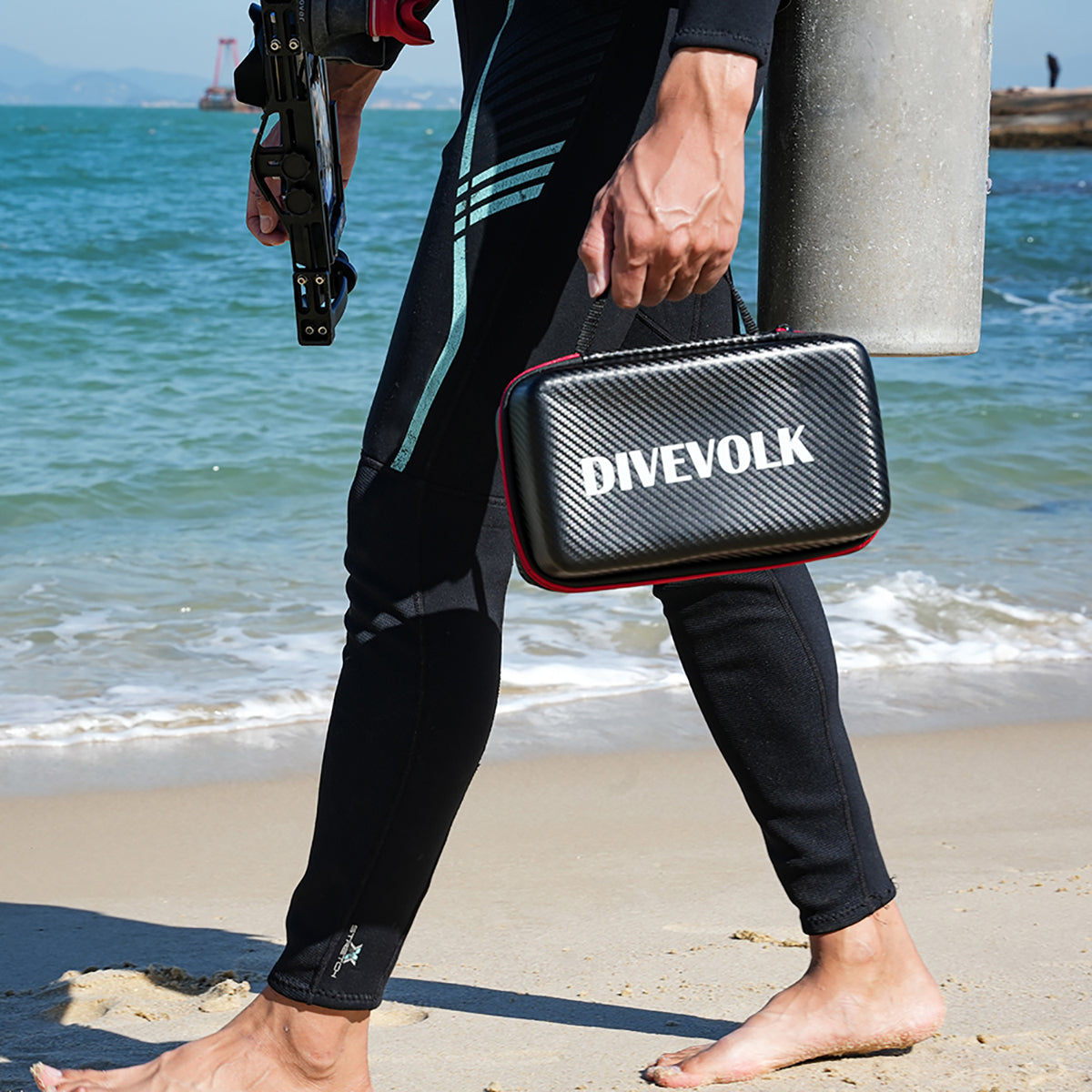
Smartphone cameras have reached the point where they rival dedicated setups for wide-angle reef scenes and video — and they're dramatically simpler to use. A DIVEVOLK underwater housing protects your phone to 60 meters (well beyond any recreational dive in Komodo) while giving you full touchscreen access to switch modes, adjust exposure, and review shots between dives. Add a wide-angle lens attachment for the big manta encounters and a compact dive light for the deeper coral walls, and you have a setup that captures everything Komodo throws at you — without the bulk, complexity, or cost of a traditional underwater camera rig.
For gear questions or setup advice before your trip, check out DIVEVOLK's technical support resources or reach out to the team directly.

Your May Holiday, Sorted
Komodo National Park is bucket-list diving that's more accessible than most people think. A direct flight from Bali, a few days on a liveaboard or based in Labuan Bajo, and you're diving world-class sites with manta rays, pristine coral walls, sharks, turtles, and the kind of fish density that makes you forget to check your air gauge. Throw in Komodo dragons, Pink Beach, and the Padar Island viewpoint, and you have a May holiday that's hard to beat at any price point.
Book early, get your Advanced Open Water if you haven't already, and pack light — Komodo does the rest. See you at Manta Point.