
Before James Cameron directed Titanic or Avatar, before he dove to the bottom of the Mariana Trench, he made a film that captured the terror and wonder of the deep ocean better than anything before or since. "The Abyss" (1989) remains the definitive diving movie—and if you haven't seen it, or haven't watched it recently, this February is the perfect time to dive in.

Why This Film Matters to Divers
Most underwater movies cheat. They film actors in tanks for close-ups, use stunt divers for action sequences, and cut everything together to simulate an underwater experience. "The Abyss" rejected this approach entirely.
James Cameron insisted on filming the bulk of the movie underwater with his actual cast. The actors—including Ed Harris, Mary Elizabeth Mastrantonio, and Michael Biehn—became certified divers and performed their own underwater scenes at depths that would make any recreational diver respect their commitment.
The result is viscerally real in a way that no amount of CGI can replicate. You're not watching actors pretending to be underwater; you're watching divers actually struggling, actually breathing through regulators, actually dealing with the physical realities of working in the deep.
The Groundbreaking Production
The Largest Underwater Set Ever Built
Cameron's quest for realism led him to an abandoned nuclear power plant in South Carolina. The former containment vessel was converted into the largest underwater filming tank ever constructed—holding over 7.5 million gallons of water. Filling it took five days.
Inside this massive tank, production designers built the complete Deep Core underwater drilling platform, allowing Cameron to film extended sequences in a continuous underwater environment.
Real Actors, Real Diving
Before filming began, the entire cast spent a week training in the Cayman Islands. They didn't learn just basic diving—they learned to work underwater, hit marks while wearing helmets, and deliver emotional performances while managing their breathing and buoyancy.
Western Space and Marine engineered specialized helmets that remained optically clear underwater and contained aircraft-quality microphones. For the first time, audiences could see actors' faces and hear dialogue during underwater scenes—a technical achievement that hadn't been attempted at this scale.
The Human Cost
This commitment to authenticity came at a price. The production was notoriously brutal.
- Chlorine exposure burned divers' skin and turned some cast members' hair white
- Ed Harris nearly drowned during one sequence when his oxygen ran low
- Cameron himself had a near-death experience when his regulator malfunctioned and a safety diver didn't respond immediately
- The cast worked 70-hour weeks, spending up to five hours a day underwater
Mary Elizabeth Mastrantonio reportedly walked off set during one emotional sequence, declaring, "We are not animals!" The tension of the production bleeds through into the film's most intense moments.
What Makes It Resonate with Divers
The Authenticity of Underwater Work
Watch the characters' hands. Notice how they move through water—not the graceful swimming of Hollywood, but the deliberate, methodical movements of working divers. When characters communicate, they use hand signals divers will recognize. When equipment fails, the panic is genuine because the stakes felt genuine to the actors.
The Respect for Depth
The film understands that depth is not just distance—it's pressure, it's narcosis, it's the limits of human physiology. A key sequence involving deep diving liquid breathing (a real but impractical technology) captures the terror of going beyond what human bodies were designed to handle.
The Beauty and the Terror
Cameron's camera doesn't just document underwater action—it captures the strange beauty of the abyss. The bioluminescent alien creatures that appear in the film were revolutionary visual effects, but they were grounded in real deep-sea footage that Cameron had studied obsessively.
The Director's Vision
"The Abyss" established Cameron's obsession with the ocean that would define his career. In interviews, he's spoken about the film as his most personal work—a meditation on humanity's relationship with the unknown depths.
This wasn't a filmmaker dabbling in underwater themes. Cameron has spent "thousands of hours underwater in shallow settings and hundreds of hours underwater in deep settings—as deep as the deepest place on the planet—and many dives to Titanic." The Abyss was the beginning of a lifelong journey that would eventually lead him to pilot submersibles to the Mariana Trench.

Watching Tips for Divers
Choose the Special Edition
The theatrical release was significantly cut for runtime. The Special Edition (also called the Director's Cut) adds over 28 minutes of footage, including a crucial sequence involving the alien species' environmental message. Most viewers consider this the definitive version.
Pay Attention to the Technical Details
Notice the decompression chamber on the Deep Core. Watch how characters manage their air supply. Observe the realistic equipment failures and the characters' responses. Cameron consulted with commercial divers and technical experts to get these details right.
Consider the Historical Context
Released in 1989, this film predates modern CGI. Every underwater shot you're watching was actually filmed underwater with real people. The "pseudopod" water creature was groundbreaking CGI for its time, but the diving sequences were accomplished through pure physical filmmaking.
The Film's Legacy
"The Abyss" won the Academy Award for Best Visual Effects and was nominated for three additional Oscars. More significantly for divers, it established a new standard for underwater filmmaking that influenced everything that followed.
Cameron's subsequent ocean projects—from "Titanic" to his documentaries "Ghosts of the Abyss" and "Aliens of the Deep" to "Avatar: The Way of Water"—all flow from the lessons learned making "The Abyss." When you watch the underwater scenes in "Avatar: The Way of Water," you're seeing techniques and philosophies born from this 1989 production.
Capturing Your Own Underwater Cinema
Cameron's vision required millions of dollars and pioneering technology. Today, any certified diver can capture stunning underwater footage with equipment that fits in a dive bag.
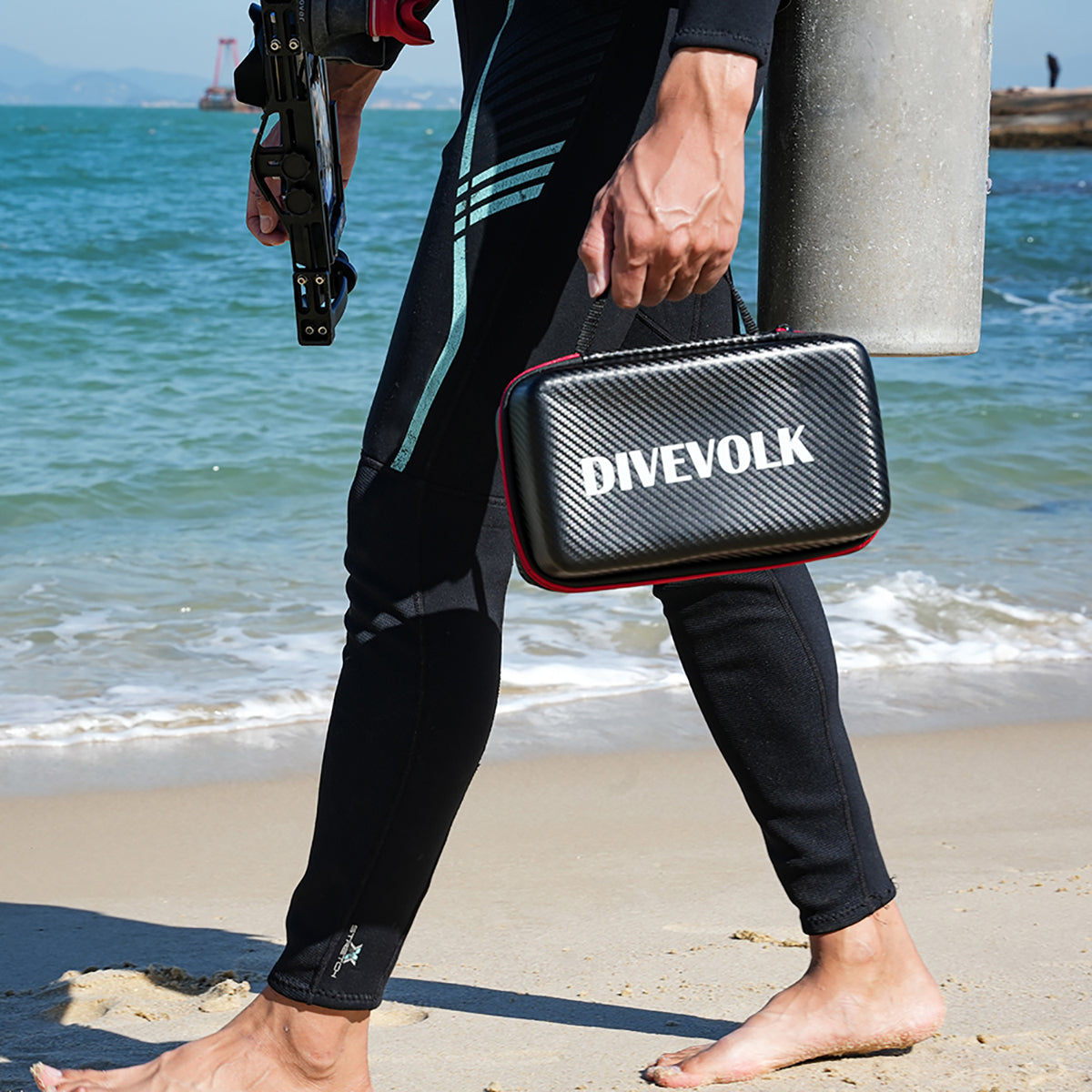
Modern smartphones shoot 4K and even 8K video with stabilization that rivals professional equipment from a decade ago. Paired with a DIVEVOLK SeaTouch 4 Max underwater housing, your phone becomes a capable underwater video camera.
The key insight from "The Abyss" applies to any underwater filmmaker: authenticity matters. Real underwater footage, shot by actual divers in actual conditions, carries a weight that simulated imagery cannot match. When you're there, swimming through schools of fish or exploring a reef at twilight, your footage captures something genuine.
Add proper video lighting to restore colors lost to depth, and you can create underwater sequences that honor Cameron's commitment to real underwater cinema.

Your February Movie Night
Here's the plan: find a comfortable couch, gather your dive buddies, and queue up "The Abyss" Special Edition. Watch it as a diver, noticing the details that non-divers miss. Appreciate the commitment and risk that went into every frame. Nights like this are also an easy first event if you ever decide to start a local dive club.
When you surface from this underwater epic, you might find yourself looking at your next dive differently—with renewed appreciation for the extraordinary environment we're privileged to explore.
After watching "The Abyss," ready to create your own underwater footage? The DIVEVOLK housing collection makes underwater videography accessible to every diver.