
For your first scuba course, choosing between PADI and SSI rarely changes what you can do on a dive boat. As we covered in our entry-level SSI vs. PADI certification guide, both agencies follow the same international safety frameworks and issue Open Water cards accepted worldwide.
Once you start planning your second and third certifications, however, the two systems diverge in ways that catch traveling divers off guard. Why do some liveaboards ask for "Advanced Open Water with 20 logged dives," while dive shops distinguish between an "Advanced Adventurer" course and an "Advanced Open Water" recognition card? Why does a Deep Specialty require four dives in one system and three in the other? And what happens if you mix PADI and SSI courses on the way to Rescue or Master Diver?
This guide compares post-Open Water progression across PADI and SSI—covering Advanced pathways, high-value specialties, cross-agency rules, digital logbooks, and underwater photography training.
Post-Open Water Progression at a Glance
Both agencies adhere to minimum training standards set by the World Recreational Scuba Training Council (WRSTC) and ISO norms, yet they organize intermediate milestones differently.
| Milestone | PADI Pathway | SSI Pathway | Key Difference |
|---|---|---|---|
| 5-Dive Course (30 m / 100 ft) | Advanced Open Water Diver (AOW): 5 Adventure Dives (Deep + Navigation + 3 electives) | Advanced Open Water Diver (formerly Advanced Adventurer): 5 specialty dives (Deep + Navigation + 3 electives) | SSI formerly called its 5-dive sampler Advanced Adventurer; SSI's updated pathway aligns the course name while keeping recognition tiers. |
| Multi-Specialty Recognition | No intermediate card before Master Scuba Diver | Specialty Diver (2 specialties + 12 dives) and Advanced Specialty Diver (4 specialties + 24 dives; legacy SSI AOWD card) | SSI issues free digital recognition cards automatically in the MySSI app as you log dives and finish specialties. |
| Deep Specialty (40 m / 130 ft) | Deep Diver: 4 open-water dives (min age 15) | Deep Diving: 3 open-water dives + 5 academic sessions (min age 15) | PADI requires 4 dives (or 3 if crediting the Deep Adventure Dive); SSI requires 3 progressive dives. |
| Enriched Air (Nitrox) | Enriched Air Diver: eLearning + oxygen analysis (dives optional; up to EANx40) | Enriched Air Nitrox: Level 1 (EAN32) or Level 2 (EAN40) with 4 academic sessions and analyzer check (no dives required) | Both are dry courses; SSI offers an online Nitrox 32 tier alongside full Nitrox 40 certification. |
| Underwater Imaging | Digital Underwater Photographer (DUP): 2 open-water dives (SEA method) | Photo & Video: 6 academic sessions + 2 open-water dives | SSI integrates both still photography and video workflows in the core curriculum. |
| Rescue & First Aid | Rescue Diver + Emergency First Response (EFR) within 24 months | Diver Stress & Rescue (6 academic + 3 pool + 3 open-water sessions) + React Right within 2 years | Both accept valid external CPR/first aid credentials; SSI emphasizes early stress detection. |
| Top Recreational Tier | Master Scuba Diver (MSD): OW + AOW + Rescue + 5 PADI Specialties + 50 dives (application required) | Master Diver: Deep Diving + Diver Stress & Rescue + 3 additional specialties (5 total) + 50 dives (automatic) | SSI mandates Deep Diving among the 5 specialties and awards the card automatically; PADI lets you pick any 5 PADI specialties. |
The Biggest Point of Confusion: What "Advanced" Means in PADI vs. SSI
On liveaboards in the Red Sea, the Maldives, or Cozumel, divers often debate whether PADI Advanced Open Water and SSI's advanced ratings are equivalent. That confusion comes down to how the two agencies built their second tier—and how SSI updated its naming.
PADI Advanced Open Water Diver: The 5-Dive Sampler
As explained in the PADI Advanced Open Water Diver course overview, PADI AOW is an in-water skill course with short knowledge reviews and no final exam. You complete five Adventure Dives right after Open Water Diver:
- Deep Adventure Dive (Mandatory): Conducted at 18–30 meters (60–100 feet) to practice deeper gas planning and computer monitoring.
- Underwater Navigation Adventure Dive (Mandatory): Compass patterns and natural navigation practiced on land and underwater.
- Three Elective Adventure Dives: Chosen from more than two dozen options—commonly Peak Performance Buoyancy, Night, Wreck, Drift, or Digital Underwater Imaging.
Finishing those five dives certifies you to 30 meters (100 feet) and credits each Adventure Dive as Dive 1 of the corresponding PADI Specialty course.
SSI's Two-Tier Philosophy: Course vs. Recognition Rating
SSI historically separated the five-dive sampler from the "Advanced Open Water Diver" title, creating two distinct paths:
- The 5-Dive Course (Formerly "Advanced Adventurer," Now "Advanced Open Water Diver"): For years, SSI named its five-dive sampler Advanced Adventurer. Because liveaboards routinely asked for "Advanced Open Water," SSI redesigned and renamed that course into the current SSI Advanced Open Water Diver program. Mirroring PADI, it requires five open-water training dives sampled from five specialties—with Deep Diving and Navigation mandatory plus three electives—and certifies adult divers to 30 meters (100 feet).
- The 4-Specialty + 24-Dive Recognition Milestone: Alongside its five-dive course, SSI runs its SSI Diver Recognition system. Completing two full specialties and logging 12 dives unlocks SSI Specialty Diver. Completing four full specialty programs and logging 24 dives automatically unlocks the Advanced Specialty Diver recognition card (which older SSI cards and veteran instructors still call the legacy SSI AOWD recognition rating).
What This Means for Liveaboards
Whether you hold PADI AOW, a legacy SSI Advanced Adventurer card, the current SSI Advanced Open Water Diver card, or SSI's 4-specialty/24-dive recognition rating, dive operators worldwide honor your 30-meter (100-foot) depth qualification—provided your training included a deep dive. The difference is water time: a diver can finish a 5-dive AOW course on dive #9 of their life, whereas SSI's 4-specialty recognition tier guarantees at least 24 logged dives.

High-Value Specialty Courses Compared
In both agencies, an introductory Adventure or specialty training dive can credit toward the full specialty certification at the instructor's discretion. Where they differ is in dive counts and how specialties count toward higher ratings.
1. Enriched Air Nitrox
On multi-dive boat days or deeper wreck profiles, breathing 32% or 36% oxygen reduces nitrogen uptake and extends no-decompression limits (without increasing maximum depth).
- PADI Enriched Air Diver: Pairs eLearning with a practical session where you analyze cylinder oxygen content, calculate Maximum Operating Depth (MOD), and set your computer for blends up to 40% oxygen. Open-water dives are optional.
- SSI Enriched Air Nitrox: Covers four academic sessions with no required dives across two tiers: Enriched Air Nitrox 32 (completable online for EAN32) and Enriched Air Nitrox 40 (which adds practical oxygen analyzer and calibration verification up to 40% oxygen). For liveaboards where fills vary between 28% and 36%, complete the Nitrox 40 practical sign-off so you can use a handheld analyzer yourself.

2. Deep Diving (to 40 m / 130 ft)
Reaching deeper walls or wrecks down to the 40-meter (130-foot) recreational limit requires a Deep Specialty (minimum age 15 in both agencies).
- PADI Deep Diver: Requires four open-water dives over at least two days, covering gas management, simulated emergency decompression, and narcosis awareness between 18 and 40 meters. Crediting the PADI AOW Deep Adventure Dive leaves three dives.
- SSI Deep Diving: Under the SSI Deep Diving Specialty standards, the full course includes five academic sessions and three open-water training dives staged progressively down to 40 meters (130 feet). Because SSI requires Deep Diving for its Master Diver rating, this 3-dive course is a cornerstone of the SSI pathway.
3. Buoyancy and Wreck Specialties
- Peak Performance Buoyancy (PADI) vs. Perfect Buoyancy (SSI): Both are two-dive courses focused on weighting checks, horizontal trim, frog kicks, and motionless hovering. Before class, review breath control in our guide on how to master neutral buoyancy, and practice body positioning at home with these dry-land dive skill exercises.
- Wreck Diver (PADI) vs. Wreck Diving (SSI): PADI's Wreck Diver requires four open-water dives covering mapping, line deployment, and optional limited daylight-zone penetration. SSI splits this into a two-dive non-penetration Wreck Diving specialty (to 30 m) and a four-dive Advanced Wreck Diving course for penetration training.
Underwater Photography Specialties: PADI DUP vs. SSI Photo & Video
- PADI Digital Underwater Photographer (DUP): Uses two open-water dives to teach PADI's SEA (Shoot, Examine, Adjust) method—covering white balance, exposure, and backscatter reduction on Dive 1, and composition with in-water image review on Dive 2.
- SSI Photo & Video: Combines six academic sessions and two open-water dives, giving equal attention to still photography and stable video clips, safe water entries with a camera rig, buoyancy while framing, and post-dive housing care.
Why Smartphone Housings Lower Task Loading During Training
The biggest risk in any beginner photography course is task loading: getting so absorbed in tiny camera buttons and unfamiliar menus that you lose depth awareness or drift toward coral. Good instructors enforce strict reef etiquette—hovering clear of the bottom, never touching, kneeling on, or harassing marine life, and putting dive safety before every shot. You can review lighting and angles before class in our underwater smartphone photography guide.
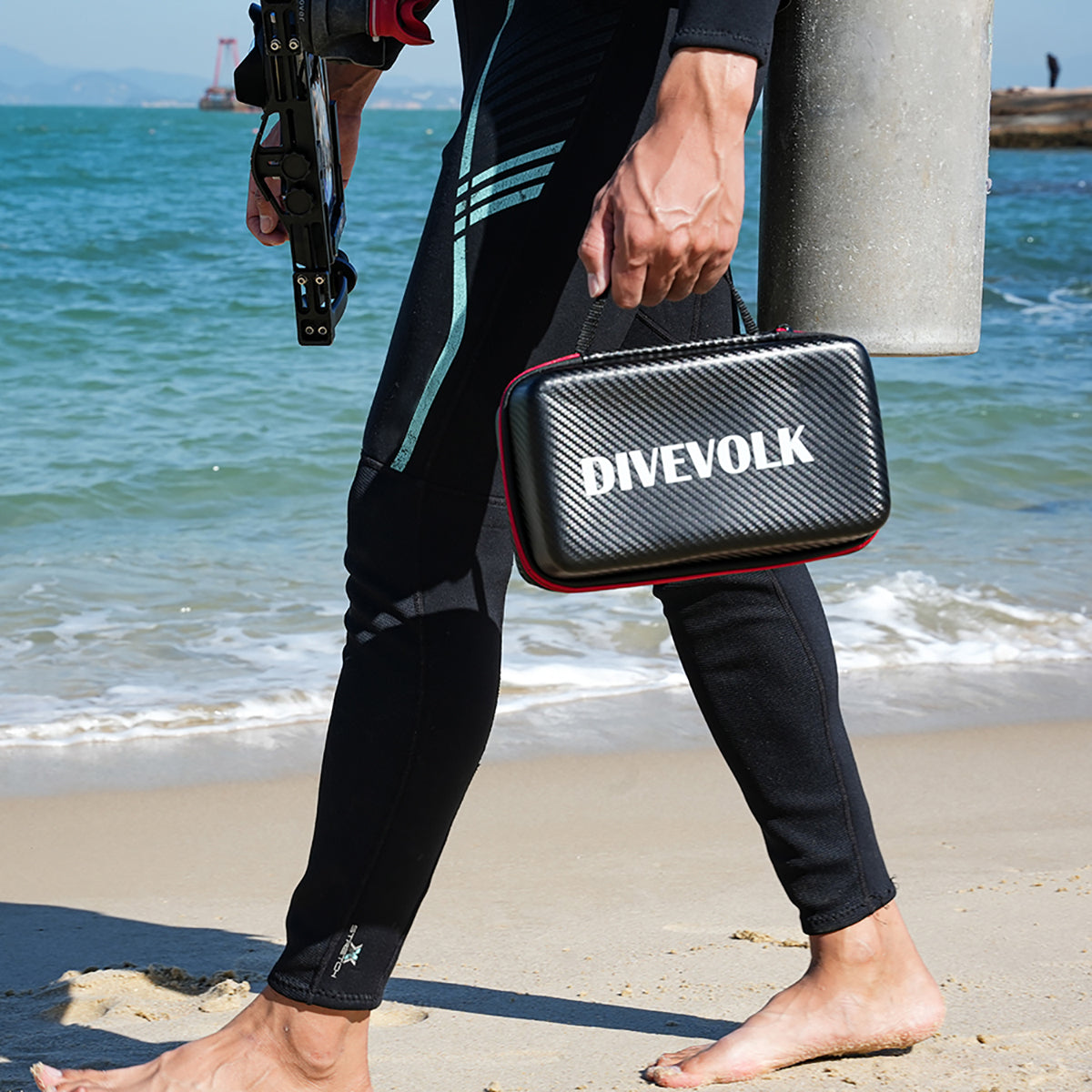
Shooting with your own smartphone inside a full-touchscreen housing removes most of that menu friction. Inside the DIVEVOLK SeaTouch 6 Pro, your phone's physical volume, power, and side buttons are sealed inside the housing and cannot be pressed; instead, you operate your native camera or pro photo apps directly through the patented sixth-generation touchscreen membrane (rated for a 150,000-touch lifespan). Because tapping to focus, sliding exposure, and switching lenses already feel automatic, you keep your attention on your depth gauge, buddy contact, and trim.
- Leave Native "Underwater Modes" Off: Many phones include a bare-phone "underwater mode" that disables the touchscreen and maps the shutter to the volume keys. Because physical phone buttons cannot be reached inside a button-free SeaTouch housing, always keep those bare-phone modes turned OFF before sealing the housing (with verified in-app touchscreen exceptions such as Samsung's Expert RAW Ocean Mode). For cold-water dives with thick gloves, pair the housing with the DIVEVOLK Bluetooth external shutter rather than relying on unreachable phone keys.
- Practice With a Red Filter and Lights: The SeaTouch 6 Pro weighs about 485 g on land, is rated to 60 m (196 ft), fits phones up to 180.0 × 82.5 × 11.2 mm (and no more than 17 mm thick at the camera module), and includes a standard red filter optimized for 0–10 m—ideal for shallow color correction before switching to video lights at depth.
- Video Feedback From Your Instructor: Many pros carry underwater phone housings to record student trim and debrief clips right on the boat—a workflow highlighted in our guides on how dive instructors use smartphone housings for training and dive teaching with a touchscreen housing.

Rescue and Master Diver: The Top of the Recreational Ladder
- PADI Rescue Diver + EFR: Requires Advanced Open Water (or Adventure Diver with Underwater Navigation) and CPR/first aid training completed within the prior 24 months—typically PADI's Emergency First Response (EFR) Primary and Secondary Care. Students practice self-rescue, panicked-diver response, missing-diver patterns, surfacing an unconscious diver, and open-water scenarios.
- SSI Diver Stress & Rescue + React Right: Requires Open Water Diver and a current first aid/CPR credential (within two years) such as SSI React Right. Across six academic sessions, three pool sessions, and three open-water sessions (to 18 m / 60 ft), SSI emphasizes spotting psychological and equipment stress early before an incident escalates into a rescue.
Pairing Rescue training with solid pre-dive habits—outlined in our essential scuba diving safety guide—makes you a calmer, more capable buddy on any boat.

PADI Master Scuba Diver vs. SSI Master Diver
- PADI Master Scuba Diver (MSD): Per PADI's Master Scuba Diver requirements, you must be at least 12 years old and hold Open Water, AOW, Rescue (or qualifying equivalents), five PADI Specialty certifications, and 50 logged dives. You can pick any five PADI specialties, then submit an application through a PADI Instructor or dive shop.
- SSI Master Diver: Requires 50 logged dives, SSI Diver Stress & Rescue, SSI Deep Diving, and three additional SSI specialties (five total). SSI mandates Deep Diving among the five courses, does not require a separate 5-dive AOW course on top of the five specialties, and issues the digital Master Diver card automatically and free of charge in the MySSI app once your 50th dive and fifth specialty are verified.
Can You Mix and Match PADI and SSI Courses?
Thanks to WRSTC and ISO equivalencies, crossing between agencies for core courses is seamless: a PADI Open Water Diver can enroll directly in SSI Advanced Open Water Diver or any SSI Specialty (and vice versa), a PADI AOW diver can take SSI Diver Stress & Rescue, and both agencies accept instructor-led CPR/first aid credentials (EFR, React Right, Red Cross, AHA) completed within the past 24 months.
Sticking with one ecosystem mainly matters in two places: first, a PADI Adventure Dive credits easily as Dive 1 of a PADI Specialty but generally will not waive a required dive in an SSI Specialty; second, PADI requires all five qualifying specialties for Master Scuba Diver to be PADI courses, while SSI's automatic recognition cards track specialties registered in your MySSI profile.
Digital Learning Experience: MySSI App vs. PADI App
- The MySSI App: Combines course manuals, digital certification cards, and a logbook covering more than 65,000 dive sites. You can download dive profiles via Bluetooth, log wildlife sightings, and scan QR codes with buddies or SSI Training Centers to verify dives—automatically advancing the progress counters for SSI's free recognition ratings.
- The PADI App: Delivers modular eLearning videos and quizzes, PADI eCards, and a digital logbook. Course eLearning is typically purchased per class or bundled by the shop, and Master Scuba Diver recognition is processed via instructor application rather than an automatic logbook counter.

How to Choose Your Next Step
- Pick the 5-Dive Advanced Course (PADI AOW or SSI AOWD) if: You have an upcoming liveaboard or resort trip, want a two-day upgrade to 30 meters (100 feet), and want to sample five different dive environments before choosing full specialties.
- Pick the Multi-Specialty Route (Especially SSI Specialty Bundles) if: You want deeper training in Enriched Air Nitrox, Deep Diving, Perfect Buoyancy, and Photo & Video while automatically earning SSI's 12-, 24-, and 50-dive recognition ratings.
- Prioritize the Instructor Over the Logo: A patient instructor who enforces small groups, proper trim, and zero-contact reef etiquette will always matter more to your growth as a diver than which emblem is printed on your certification card.