
Buying the housing is the easy decision. What goes on it is where people overspend, or spend on the wrong thing first. A snorkeling parent and a macro shooter chasing nudibranchs in Lembeh need almost nothing in common beyond the SeaTouch 6 Pro itself, yet they usually get sold the same shopping list.
This guide sorts the accessories by how you dive rather than by price tier. One note up front: SeaTouch 6 Pro kit names, contents, regional availability and pricing follow the official launch, so confirm the current configuration on the underwater phone housings page instead of planning around a number you saw quoted somewhere. The existing SeaTouch 4 Max Kits show how DIVEVOLK usually structures a bundle, which is useful for budgeting even before the new lineup is listed.
Start With What Is Already in the Box
The SeaTouch 6 Pro includes two things the previous generation did not: a snorkeling red filter tuned for 0 to 10 meters that clips straight onto the lens window without a bracket, and anti-fog desiccant pads that drop into a built-in slot. Both solve problems people used to buy their way out of. Before you add anything, dive the housing as it comes for two or three trips. You will find out fast whether your actual complaint is color, light, framing distance or handling, and each of those points at a different purchase.

Snorkeling and Family Days
If most of your water time is a mask, a snorkel and warm shallows with kids around, the honest answer is that the housing plus the included red filter is your kit. At 0 to 10 meters the filter does the color work, and there is enough sunlight that a video light adds weight without adding much image.

What is worth adding is a wrist lanyard or float strap so the housing does not sink if a wave separates it from your hand, and a screen protector on the housing's rear glass. Skip the clamp, skip the lights, skip the wide-angle lens. Family snorkel photos are ruined by distance and murk far more often than by hardware, so get closer and shoot toward the sun rather than away from it. The beginner underwater photography guide covers the technique side. If anyone in the group is snorkeling in a full-face mask, read the CPSC warning coverage before the trip, since that is a safety decision rather than a photography one.
Recreational Reef Diving
This is the largest group: two or three dives a day, 10 to 25 meters, mixed subjects, no fixed plan. The included snorkeling filter runs out of range here, since it is tuned for the top 10 meters. Below that you have two paths. A filter tuned deeper, such as DIVEVOLK's Internal Red Filter for 5 to 25 meters, restores color from ambient light and costs you nothing in bulk. A video light restores color by putting real red photons back on the subject, and works at any depth, at night, and inside overhangs.
Most reef divers end up wanting one compact light rather than two big ones. The SL20 at 2000 lumens is the usual starting point: enough for a subject a meter away, small enough that it does not turn the rig into a sail. The full range sits in dive lights, and we compared output tiers in the SL120, SL50 and SL20 review. Plenty of divers end up carrying both a filter and a light and choosing per dive; our color correction guide explains which one suits which conditions, and NOAA's National Ocean Service explains why red disappears first in the first place.
Add a light before you add a lens. A brighter subject helps every photo you take; a wide-angle lens helps only the photos you framed for it.
Macro
Macro is where the phone genuinely competes with dedicated cameras, and where the accessory choice gets specific. You need a wet macro lens, a light you can aim at short range, and a way to hold everything steady with one hand.
DIVEVOLK sells two strengths, and choosing between them matters more than most buyers expect. The +8 gives more working distance and is easier to hit focus with on moving subjects. The +18 gets you into the eyes of a shrimp but leaves a working distance so short that skittish animals leave first. We put them side by side in macro lens +8 vs Pro +18. Both live in lenses and filters.
The second macro purchase is the Underwater External Shutter. Pressing a Bluetooth trigger mounted on the rig disturbs the frame far less than tapping the screen, and on the SeaTouch 6 Pro it mounts in either of two positions, so it sits under your thumb whichever hand holds the rig. The inverted position drops the lens closer to the seabed for low-angle work. This is also the only correct answer for tactile shooting: the housing is button-free, and once the phone is sealed inside its own volume and power buttons cannot be pressed at all.
Macro also demands the tightest buoyancy control of any kind of underwater shooting, because you are working centimeters from a reef you must not touch. Stay off the bottom, keep your fins clear, and follow NOAA Fisheries viewing guidelines on distance. If your hovering is not there yet, fix that before buying the lens; our buoyancy guide is the cheaper purchase.
Wide Angle, Split Shots and Video
Big subjects and big scenes need the opposite kit. A wide-angle wet lens pulls the whole reef into frame from close enough that the water between you and the subject stops eating contrast, which is the real trick of wide-angle underwater work. Our wide-angle lens guide covers positioning.
The SeaTouch 6 Pro has an integrated dome port mounting slot, so the second-generation Dome Lens attaches with no extra adapter, and its larger window covers the main and ultra-wide cameras at once. That means you can switch phone lenses underwater without repositioning the dome, which was a genuine irritation before. If half-and-half shots are the goal, read the dome port technique guide first, because the technique is harder than the purchase.
Video divers should budget for two lights rather than one. A single light throws a hard shadow that a still photo can survive and a moving clip cannot. Two lights on an expansion clamp also add drag and change your trim, so plan for it: Divers Alert Network makes the point that any equipment change resets your weighting.
Cold Water and Gloves
Thick gloves are the one condition where the touchscreen concept meets a real limit. Dry gloves and 5 mm neoprene do not conduct the way a bare finger does, and no membrane changes that. Two things help. Touchscreen-compatible glove materials work on the SeaTouch membrane; we wrote up the options in the cold water glove solution. And the external Bluetooth shutter gives you a physical trigger you can hit through anything, which is exactly what it exists for.

Cold water also runs harder on batteries and on fog control. A phone at 40 percent charge in 8 degree water can shut down mid-dive, so start full, and put a fresh desiccant pad in before every dive when the deck is warm and the water is not.
If You Already Own a SeaTouch 4 Max
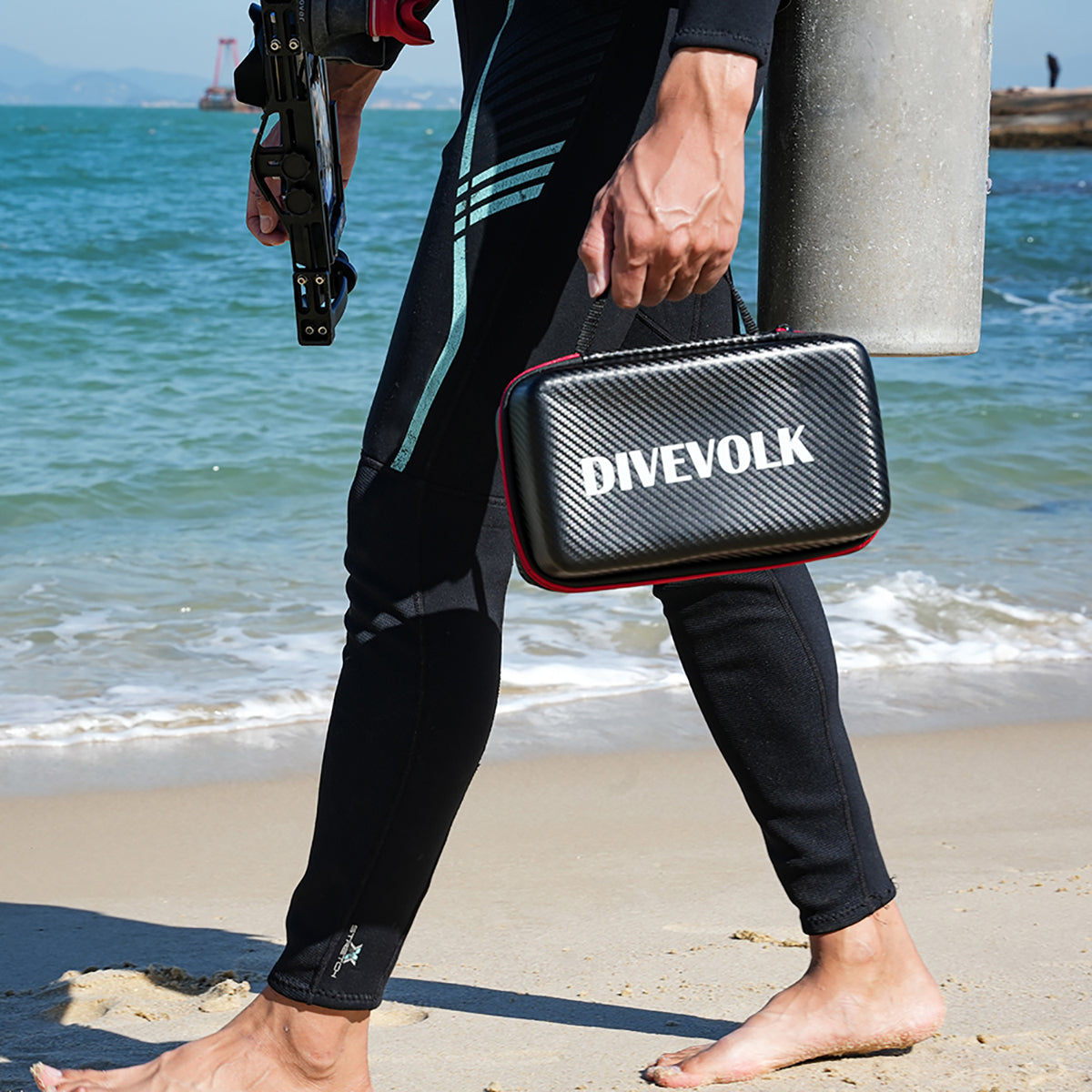
Wet lenses, filters and lights are optical and mechanical parts that mount to the rig rather than to a specific housing generation, so most of them keep earning their place. The parts that changed are the ones bolted to the body: DIVEVOLK rebuilt the Expansion Clamp for this generation, enlarged the travel case so the housing packs with clamp and dome attached, and moved the dome to an integrated slot. Before you assume a specific old part transfers, send the model number to technical support and get it confirmed. Buying a second copy of something you already own is the most avoidable mistake on this page.
Buying Order That Avoids Regret
Across every style above, the order stays roughly the same. Dive the housing bare first. Then buy the color solution your depth range calls for, filter or light. Then a lens for the subject you keep missing. Then the clamp and arms that carry it all. Then a second light if you shoot video. Buying that fifth item first is how people end up with a rig they resent carrying.
Two practical notes for travel. Lights mean lithium batteries, and those ride in carry-on with terminals protected under FAA rules, so build your packing around that rather than discovering it at the counter. And every accessory you add is another thing to rinse, dry and inspect. Our dive travel packing checklist keeps the list honest.
If You Are Still Unsure
Tell us what you shoot rather than what you want to own. Depth range, water clarity, subject size and whether you dive in gloves determine the kit almost entirely, and getting that answer right saves more money than any bundle discount. Send the details to technical support and start from the housing collection when the SeaTouch 6 Pro configuration goes live.