
Getting your Open Water (OW) certification is one of the most rewarding things you'll ever do. It's your passport to exploring a world that covers more than 70% of our planet — coral reefs teeming with life, dramatic walls dropping into the abyss, and shipwrecks frozen in time. But before you take that first giant stride off the boat, there are a few things you should know. This guide walks you through every step of the process so you can start your diving journey with confidence.
What Is Open Water Certification and Why Does It Matter?
An Open Water certification is the entry-level scuba diving credential recognized worldwide. Issued by training agencies like PADI, SSI, and NAUI, this certification proves you've mastered the fundamental skills needed to dive safely to a maximum depth of 18 meters (60 feet) with a buddy.
Without a certification card — commonly called a "C-card" — most dive shops and liveaboards won't let you rent gear or join guided dives. Think of it as a driver's license for the underwater world. Once you earn it, your OW certification never expires and is honored at dive operations in every corner of the globe.

Prerequisites: Can You Do It?
The barrier to entry is lower than most people think. Here's what you need:
- Age: Most agencies require you to be at least 10-12 years old. Junior certifications are available for younger divers with restrictions on depth and supervision.
- Health: You'll fill out a medical questionnaire before starting. Conditions like asthma, heart disease, epilepsy, or ear problems may require a doctor's clearance. If you're in generally good health, you're likely fine.
- Swimming ability: You'll need to swim 200 meters (or 300 meters with a mask, fins, and snorkel) without stopping, plus float or tread water for 10 minutes. These aren't races — you just need to demonstrate basic comfort in the water.
If you have concerns about any medical condition, consult Divers Alert Network (DAN) — they maintain the most comprehensive diving medical resources available and can connect you with a dive-medicine physician.
What to Expect: The Three Phases of OW Training
Every Open Water course follows a structured progression designed to build your skills and confidence gradually. Here's what each phase looks like.
1. Knowledge Development (Classroom / eLearning)
You'll learn the theory behind diving: how pressure affects your body, how to plan dives, how to read dive tables or use a computer, and what to do in emergency situations. Most agencies now offer this portion as an online self-study course you can complete at your own pace before you even arrive at the dive shop. Expect to spend 10-15 hours on this material, followed by quizzes and a final exam. It also helps to learn core scuba terms in English, since dive briefings at many destinations use them.
2. Confined Water Training (Pool Sessions)
This is where things get exciting. In a pool or calm, shallow water, your instructor will walk you through essential skills: assembling your gear, breathing from a regulator, clearing your mask, controlling your buoyancy, and performing safety drills. Most courses include 4-5 confined water sessions. Take your time here — the more comfortable you are with these fundamentals, the more you'll enjoy your open water dives.
3. Open Water Dives
The final phase consists of four open water dives, usually completed over two days. You'll practice the same skills you learned in the pool, but now in a real-world environment — an ocean, lake, or quarry. You'll also get to experience the pure joy of weightless exploration. Your instructor will be right beside you the entire time. Some instructors even film students' skills with a touchscreen housing for a clearer debrief on the boat.

How to Choose a Dive School and Instructor
Your instructor can make or break your experience. Here's how to pick the right one.
PADI vs SSI vs NAUI: Does the Agency Matter?
Honestly? Not as much as you think. All major agencies teach the same core skills and are universally recognized. The differences are mostly in branding, materials, and teaching philosophy:
- PADI — The largest agency worldwide with the most dive centers. Great eLearning platform and highly standardized training.
- SSI — Free digital learning materials and a strong emphasis on dive center partnerships. Excellent app for tracking dives.
- NAUI — Known for a more academic, skill-intensive approach. Smaller network but deeply respected among technical divers.
What actually matters most is your instructor's teaching style, the student-to-instructor ratio (look for 4:1 or lower), and how well-maintained the dive shop's rental gear is. Read recent reviews, ask about class sizes, and don't be afraid to have a conversation with the instructor before signing up. If you're torn between the two biggest agencies, compare SSI and PADI side by side before you book.
Learn at Home or on Vacation?
You have two options: complete the entire course at a local dive shop, or do the classroom and pool work at home and finish your open water dives at a tropical destination (called a "referral"). Both work well. Learning locally gives you more time and less pressure. Doing your dives on vacation means warmer water and better visibility — but a tighter schedule.
Cost Breakdown: What Will You Actually Spend?
OW certification costs vary significantly by location. Here's a realistic breakdown:
- Course fee: $300-$600 in most Western countries; $250-$400 in popular tropical destinations like Thailand, Indonesia, or Mexico.
- eLearning materials: $100-$200 (sometimes included in the course fee, sometimes separate).
- Gear rental: Often included, but confirm with your dive shop. If not, expect $30-$50 per day.
- Medical clearance: $50-$150 if your questionnaire flags anything (not always needed).
- Certification card: $25-$50 for a digital or physical card (often included in course fee).
Total estimate: $350-$800 all-in. Be wary of deals that seem too good to be true — they often mean larger class sizes, rushed schedules, or hidden fees for gear and materials.

Common Fears and How to Overcome Them
Almost every new diver has anxieties before their first dive. You're not alone, and here's the good news: every one of these fears is manageable. Many of these worries also show up among the 15 scuba FAQs beginners ask most.
Equalizing Your Ears
That pressure you feel in your ears as you descend is completely normal. Your instructor will teach you to equalize by pinching your nose and gently blowing — a technique called the Valsalva maneuver. The key is to equalize early and often. If it hurts, you've gone too deep too fast. Simply ascend a meter, equalize, and try again. Most people get the hang of it within the first few minutes.
Breathing Underwater
Your survival instincts might scream at you the first time you put your face underwater and breathe through a regulator. That's normal. The solution is simple: take slow, deep breaths and focus on your exhale. Within minutes, it feels completely natural. Your confined water sessions are specifically designed to get you past this hurdle in a safe, controlled environment.
Marine Life Encounters
Sharks, jellyfish, "something touching my leg" — these fears are almost entirely fueled by movies. In reality, marine creatures are far more afraid of you. The golden rule is simple: look but don't touch. Maintain a respectful distance, avoid chasing or cornering animals, and you'll find that underwater wildlife encounters are magical, not scary. Responsible diving means observing without interfering — take only photos, leave only bubbles.
Gear: What You'll Need vs What's Provided
For your OW course, the dive shop will provide all major equipment: BCD (buoyancy control device), regulator, tank, weights, wetsuit, mask, fins, and snorkel. You don't need to buy anything before your course.
That said, most divers recommend owning your own mask from day one. A properly fitting mask makes an enormous difference in comfort and enjoyment. Beyond that, hold off on purchasing gear until after your certification — you'll have a much better sense of what you actually need. When that time comes, a gear checklist for new divers helps you decide what to buy first.
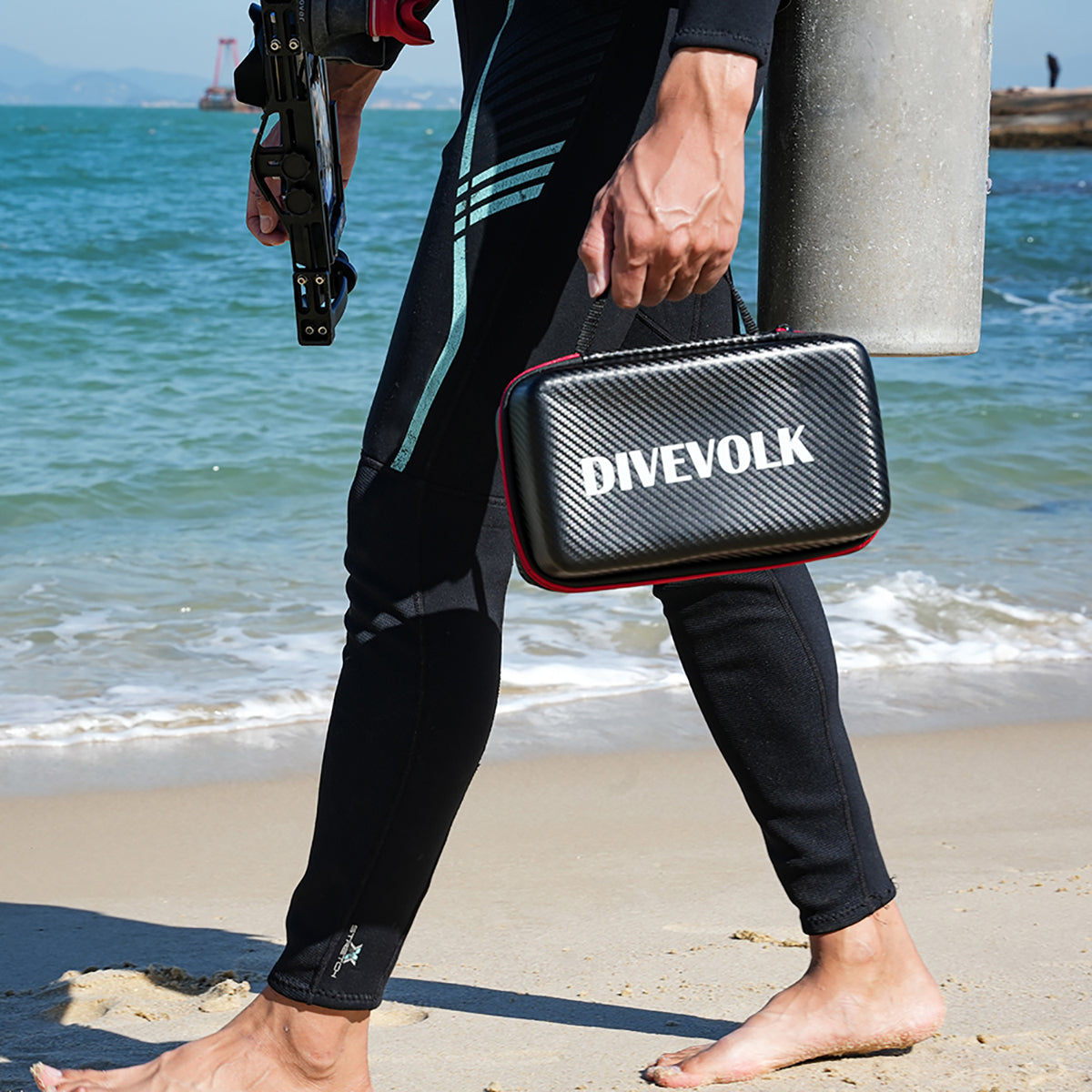
One piece of gear worth considering early on: an underwater phone housing. Modern smartphone cameras are incredibly capable, and a housing like the DIVEVOLK SeaTouch 4 Max lets you capture photos and video during your dives without investing in a dedicated underwater camera system. For new divers, it's one of the easiest ways to start documenting your underwater adventures. Pair it with a compact dive light to bring out the true colors of the reef, and check out the SeaTouch 4 Max Kits for ready-to-go bundles.

Tips for Making the Most of Your OW Course
These practical tips will help you get more out of your training and set you up for a lifetime of great diving:
- Complete your eLearning before pool sessions. The more theory you've absorbed, the more you can focus on hands-on skills in the water.
- Practice mask clearing at home. Fill your mask with water in the shower and practice exhaling through your nose to push it out. This single skill causes the most stress for new divers, and extra practice pays off. The same dry-land approach works for navigation and other dive skills, too.
- Don't skip the buddy checks. BWRAF (BCD, Weights, Releases, Air, Final check) keeps you and your buddy safe. Make it a habit from day one.
- Focus on buoyancy. Good buoyancy control is what separates a nervous new diver from a confident one. Breathe slowly, make small adjustments, and resist the urge to use your hands for propulsion.
- Stay warm. Cold divers are uncomfortable divers. If your dive shop offers different wetsuit thicknesses, don't be afraid to ask for a thicker one.
- Keep a dive log. Write down details after every dive — depth, time, what you saw, what you learned. It accelerates your growth as a diver and creates memories you'll treasure.
- Ask questions. There are no stupid questions in a dive course. If something doesn't make sense, ask your instructor to explain it again or demonstrate it one more time.
What Happens After Certification?
Once you've passed your Open Water course, a whole world opens up. You can dive independently with a buddy at sites up to 18 meters, join guided dive trips, and start working toward your Advanced Open Water certification — which unlocks deeper dives (up to 30 meters), night diving, navigation, and specialty courses like underwater photography.
Many new divers catch the bug immediately. They go from "I just want to try it" to booking their next dive trip before they've even dried off. If that sounds like you, welcome to the club.

Ready to Take the Plunge?
Your Open Water certification is the beginning of something incredible. It takes just a few days to earn, costs less than many people expect, and gives you access to experiences that most people only dream about. Find a reputable dive school, complete your eLearning, show up ready to learn — and don't forget to bring your phone housing to capture the moment you become a diver.
For more diving tips, gear guides, and underwater inspiration, visit our blog.